
What to Expect on Your First Day of Class 1A Training
Nervous about your first day behind the wheel of a tractor-trailer? Here is exactly how...

Fog, smoke and heavy rain can cut your view of the road without warning. Practical steps that keep professional drivers and everyone around them safe.
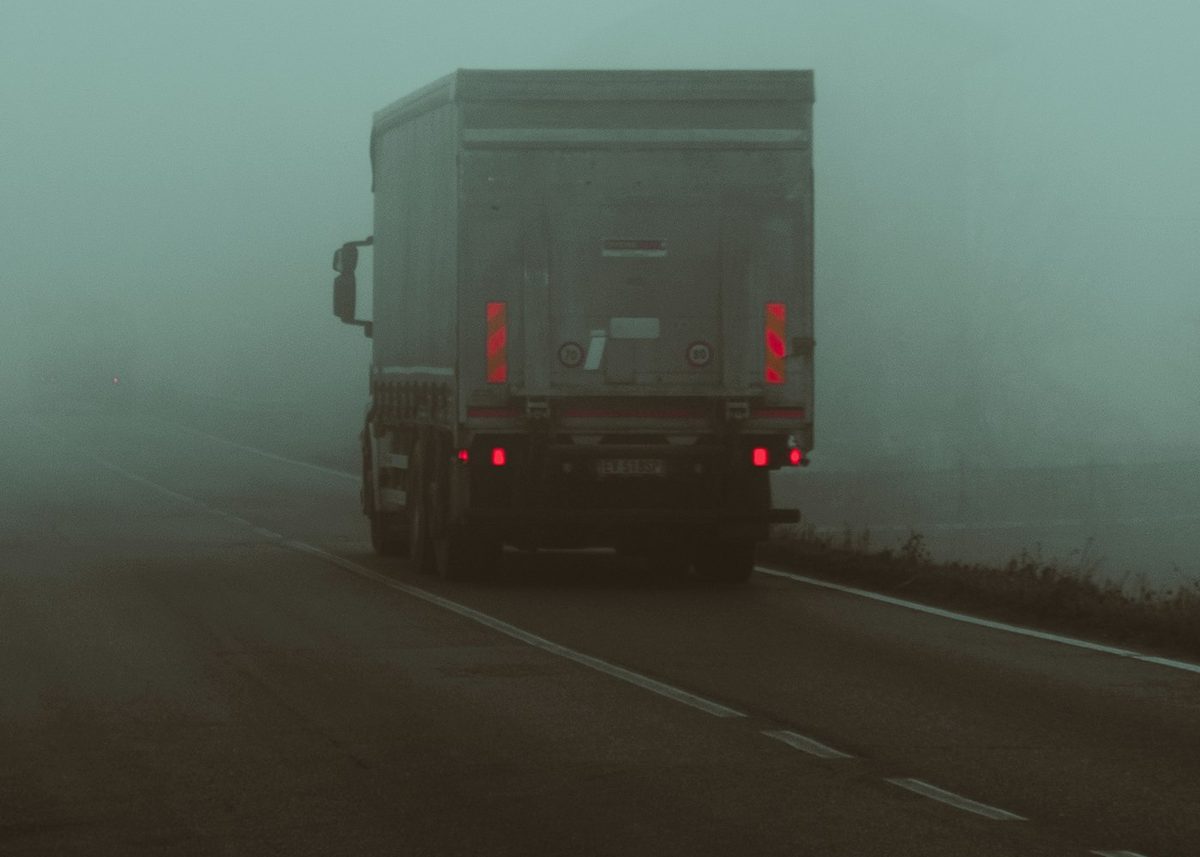
Low visibility is one of the most dangerous conditions a driver can face. In fog, a truck that is fully visible one moment can be hidden the next, and the long stopping distance of a heavy vehicle leaves very little margin for error. Whether it is morning fog along a river valley, smoke from a wildfire or heavy rain, the right response is to slow down and increase your safety margin.
Check the weather forecast and road reports for your route. Fog often forms overnight and clears by mid-morning, so a short delay can make the trip safer. Make sure your headlights, taillights, marker lights and windshield wipers are working and clean, because you will rely on every one of them.
Slow down to a speed at which you can stop within the distance you can see. Double or triple your normal following distance so that you have time to react if the vehicle ahead brakes. Do not tailgate just to follow another vehicle's lights, since a sudden stop can lead to a chain-reaction collision.
Use the right edge line as a guide, but do not drift toward the shoulder. Reduce distractions, turn down the radio and open your window slightly if needed to hear traffic. Be prepared for stopped vehicles, slow-moving farm equipment or animals on the road.
If you cannot see safely, find a place to pull off the road completely, such as a rest area, a truck stop or a wide approach. Turn on your hazard lights and keep your foot off the brake so that following drivers do not mistake your brake lights for a moving vehicle. Move away from the vehicle if it is unsafe to remain inside, and call for help if needed.
Defensive driving does not come from a handbook alone. In our Class 1A and Class 3A courses, students practise observation, speed management and following distance in real on-road conditions with an instructor beside them. Learning how to respond calmly when conditions deteriorate is part of becoming a professional driver, and it is a skill you will use every season of the year.
Nervous about your first day behind the wheel of a tractor-trailer? Here is exactly how...
The pre-trip inspection is the first skill every commercial driver learns and one of the...
How air brakes work, why they behave differently from the hydraulic brakes in your car,...
Give us a call or send an email and we'll help you pick the right course

